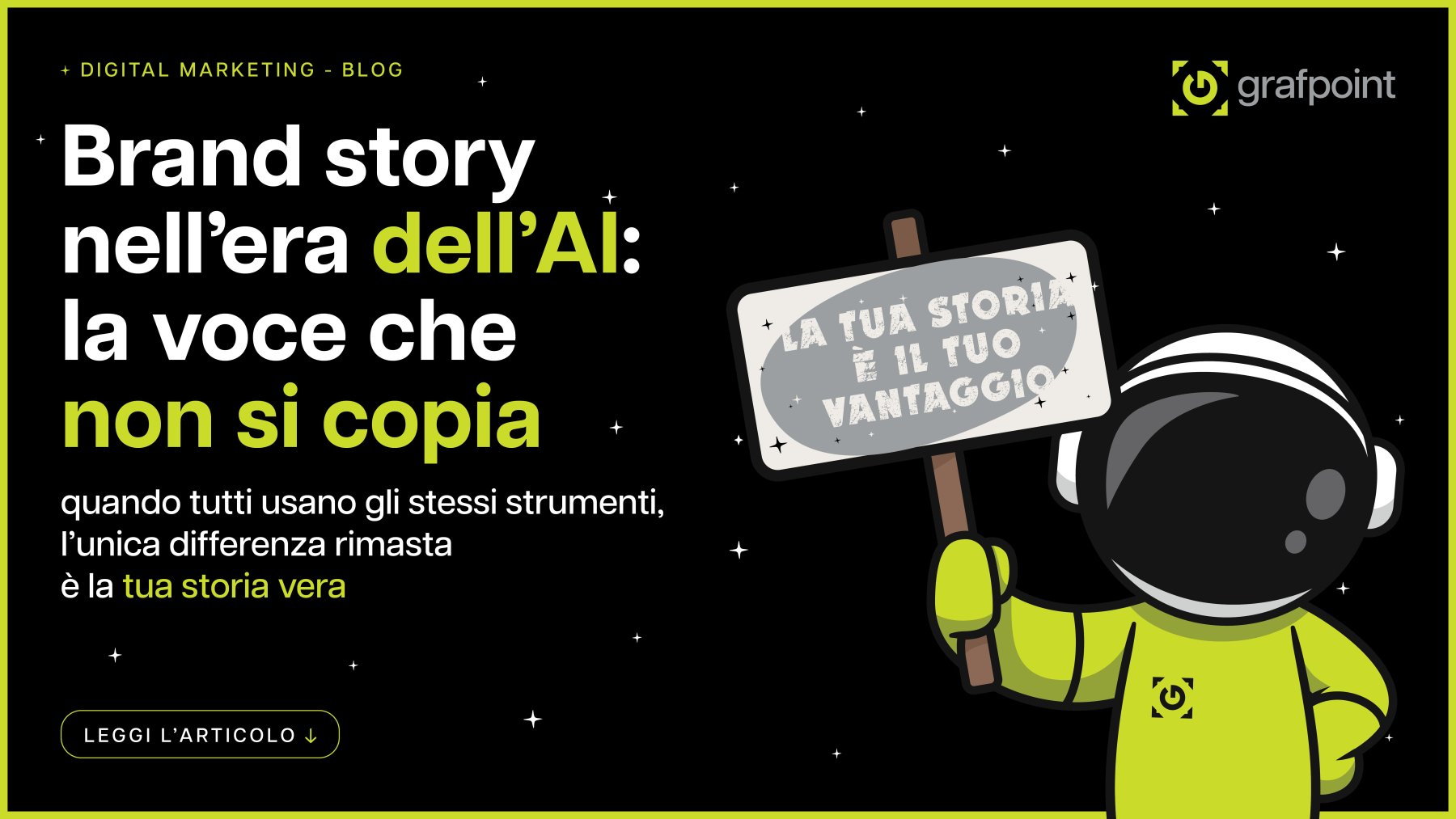
Brand Storytelling in the AI Era: How to Stay Authentic When Everyone Uses the Same Tools
The Paradox of Infinite Content
There's something paradoxical about the digital communication landscape of 2026: we have never been more capable of producing content, and we have never been more starved of content actually worth reading. Artificial intelligence has dismantled the technical barriers of production — anyone can generate articles, posts, newsletters and scripts in seconds. The result is an ecosystem saturated with texts that are correct, fluent, formally impeccable and profoundly indistinguishable from one another.
For brands, this creates unprecedented pressure. It's no longer about producing more or doing it faster — on that playing field, competing with AI systems is a losing game from the start. It's about something subtler and harder: remaining recognisable. Having a voice that, even without a logo or signature, one's audience would immediately associate with that specific brand.
What Authenticity Really Means in 2026
Authenticity doesn't mean performative imperfection — posting blurry photos or deliberately rough text to appear spontaneous. It means coherence between what a brand says and what it does, between the public narrative and internal reality, between stated values and concrete choices. Consumers in 2026 have developed a sharp intuition for detecting the gap between narrative and substance: when the story doesn't hold up against reality, trust collapses.
Another dimension of authenticity concerns point of view. Generic content doesn't create connection. What engages is the specific perspective: not "what we think about AI in marketing" but "what we think about AI in marketing, we who work this way, for these clients, with this particular worldview".
"Competitive advantage doesn't come from the quantity of content produced or from chasing every new platform. It comes from the depth of human connection you manage to create and sustain over time."
The Protagonist Isn't You: It's Your Customer
One of the most common structural errors in brand storytelling is the wrong focal point: the company is placed at the centre instead of the customer. But the stories that work follow a universal narrative principle: the protagonist is not the brand, it's the person living that story.
The brand is the mentor — indispensable, competent, present at crucial moments — but it's the customer who faces the challenge, overcomes the obstacle and achieves the result. This shift in perspective radically transforms how content is perceived: from advertising to a real story, from promotion to recognition.
In practice, this translates into concrete choices: telling real cases instead of abstract promises, using testimonials that describe a transformation, structuring content around recognisable problems rather than self-referential solutions.
AI as Amplifier, Not Substitute
The right question isn't 'can we use AI?' but 'how do we use it so it amplifies our voice instead of standardising it?'
The distinction is operational and concerns the workflow:
- Strategy and point of view remain human. The vision of what to tell, to whom, in what tone is not delegated to an AI system.
- AI accelerates execution. Drafts, variants, channel adaptations: real efficiency without touching the narrative identity.
- Final review is always human. Only someone who knows the brand can recognise whether content sounds authentic or artificial.
In 2026, the difference isn't between those who use AI and those who don't. It's between those who use it as a shortcut to generic content and those who use it as leverage to produce more without losing their voice.
The Storyworld: When Narrative Becomes a System
The strongest brands in 2026 don't publish isolated content: they build coherent narrative systems across multiple channels, formats and timeframes. In a coherent storyworld, an Instagram post, a blog article, a podcast and a case study all tell the same underlying story — with different angles, but with the same recognisable voice.
Narrative fragmentation is one of the main factors that weakens brand perception. In 2026, with the volume of content growing exponentially, the risk is higher than ever. Narrative coherence is no longer an aesthetic aspiration: it's a measurable competitive advantage.
In Summary
In 2026, a brand's authenticity doesn't depend on avoiding AI, but on not letting it decide who you are. Technology can produce infinite content; the human voice — coherent and recognisable over time — is what no system can replicate, because it comes from a real story, real choices and a genuine relationship with the people you speak to.